
It’s a long game.
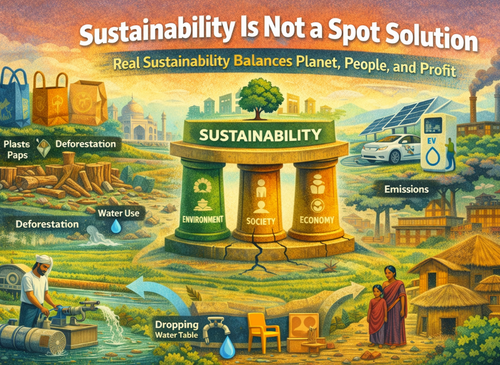
Real sustainability needs connected thinking. Environmental, social, and economic factors must work together. Solving one problem in isolation often creates another.
Spot solutions look good on the surface—but fail underneath.
Banning plastic bags sounds sustainable. Pushing electric vehicles feels progressive. But when actions focus on one metric and ignore the rest, the impact backfires.
Replace plastic with paper without checking deforestation, water use, or energy costs—and you simply shift the damage. Promote EVs without clean power—and emissions move from roads to power plants.
The same issue shows up in agriculture. Subsidised solar pumps support clean energy and food security. But without groundwater regulation, they accelerate water depletion. In some regions, water tables have dropped hundreds of feet. One SDG improves, others collapse.
That’s the problem with fragmented sustainability.
And sustainability isn’t just environmental. It’s social and economic too. Protecting forests while displacing communities isn’t sustainable. Cutting carbon while exploiting labour isn’t progress.
True sustainability balances three pillars:
planet, people, and profit.
Ignore one—and the whole system cracks.