
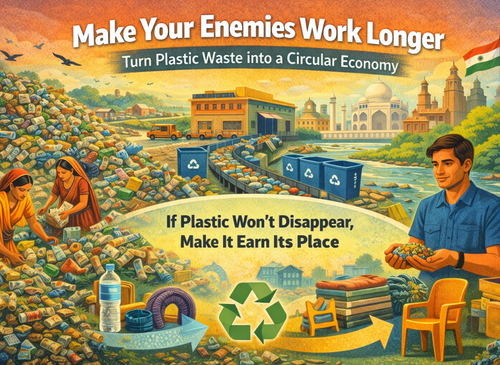
Plastic is both a win and a warning.
It changed the world—cheap, light, durable, everywhere. From healthcare to transport, plastic made life faster and easier. But that same durability turned it into an environmental nightmare.
Plastic doesn’t die.
It piles up in landfills.
It chokes rivers.
It floods oceans.
So here’s the real question:
Why try to erase an enemy that refuses to disappear—when you can force it to work for you?
Plastic’s biggest flaw is also its biggest strength. It lasts. Instead of letting it sit idle in dumps and water bodies, recycling pushes plastic back into use—again and again.
That’s the shift.
From waste to resource.
From threat to opportunity.
Recycling isn’t just waste management.
It’s a mindset upgrade.
Traditionally, plastic follows a straight line: make → use → dump. This “take–make–dispose” model drains resources and damages the planet. Recycling breaks that pattern and replaces it with a circular economy.
In this loop, plastic never retires early.
Bottles turn into fabric.
Packaging becomes building material.
Old containers become furniture or roads.
By extending plastic’s life, we cut the need for virgin plastic. That matters because most plastic comes from fossil fuels like petroleum and natural gas. Recycling reduces fresh extraction, saves energy, and lowers carbon emissions.
Less waste.
Less pollution.
Lower climate impact.
And there’s another upside we don’t talk about enough—jobs.
Plastic recycling creates work across the chain: collection, sorting, processing, transport, and manufacturing. It supports waste pickers, recycling units, logistics workers, and small manufacturers. When done right, it formalises informal labour and drives inclusive economic growth.
So no, recycling isn’t a soft solution.
It’s a smart one.
If plastic won’t disappear, make it earn its place.
Make your enemies work longer.